By John F. Creasy
(Warning: This post contains historic post-mortem images that some may find disturbing.)
Some 2,000 years ago in the area now encompassing the British Isles and the north of France, the Celtic people gathered around huge bonfires that illuminated the dark night skies of October 31st. They were adorned in costumes, often wearing animal heads and skins, and they listened intently to the Druid priests who were in attendance and making predictions about the future. For the Celts, the last day of October bore great significance for a number of reasons.
The first day of November marked the beginning of the Celtic new year. Summer’s end was recognized on this day as was the end of the harvest. On a more ominous note, November 1st began the season of winter with its cold days and longer periods of darkness, and was also the season most associated with the spread of human disease and death. Celtic lore, too, held that on the evening of the last day of October, the spirits of the dead returned to roam the earth, bringing damage to crops and causing general mischief. It was the belief of the Druid priests that these haunting spirits enabled them to more easily and accurately foretell events that would occur in the coming winter. The bonfires, costumes, rituals, animal and crop sacrifices, and general celebration occurring on the last night in October was called Samhain by the Celts.
A thousand years later, the influence of Christianity brought the designation of November 1st as All Saints Day, a church-sanctioned day of remembrance for saints and martyrs. This day was often called All-hallows, a Middle English reference to All Saints’ Day, and the night before, All-hallows Eve, and later, Halloween. The bonfires and costumes of the original Celtic celebration continued despite the remonstrations of the church, as did the belief in the hauntings of the spirits. Eventually, All Saints’ Day would become All Souls’ Day to honor all the dead.
Through the ages, the celebrations of the original Celtic festival have continued in various forms, conjuring up images ranging from the macabre and the ghastly to today’s greater focus on yard decorations, clever costumes, and trick-or-treating. However, one only has to go back in time no more than a couple generations to a period when superstitious beliefs were more common, and death in its many forms had a fearsome mystery unequaled today. In those days, death occurred in or near the family home rather than in the comparatively sterilized confines of today’s hospitals and nursing homes. The funeral that followed was more often than not held in the parlors of those that had them or the front yards of those who did not. This proximity, along with the frequency of death, lent itself to customs, superstitions, beliefs and practices that often seem strange and quaint to our modern 21st century ways.
It was commonly believed that before death appeared to claim its victim, certain signs portended its arrival. A common belief was that if one were to dream of falling and hitting the ground, it meant death to the dreamer. Shivers were an indication that someone was walking over the spot that would be your grave, and it was said that if someone swept under a sick person’s bed, the ill person would soon die.
Many believed that a house could foretell a death. Unaccountable knocking in the walls or strange sounds like the ticking of some unseen clock might put the occupants on notice that death lurked nearby. Unexplained cracks in windowpanes also were a source of superstitious concern.
The physical world, too, offered its share of warnings to those inclined to observe such. Many believed the sight of a falling star meant that someone was dying or soon to do so. Others believed that this was instead the soul of someone on their way to heaven. Dreaming of flowers was said to foretell death, as did the planting of a cedar tree that might later die. It was also believed that most older people died when the sap was going up or down in trees.
Some of the stranger superstitions centered around animals. One such belief was that if a bird flew into a house, whomever it flew over would die. A dove sitting atop a house warned of death to an occupant, as did the sighting of a red bird inside the house. Cows bawling or dogs howling at night also foretold death. A dog rolling onto its back and lying motionless, or a screaming cat in the house of a sick person, were thought to foretell someone’s demise. A saying still occasionally heard today is that an inch worm found crawling on someone is actually measuring that person for a casket. Finally, another unusual belief concerning animals involved a whippoorwill. It was said that if one landed on the bedpost of a sick person and began singing, that person would soon die.
One of my ancestors, Jennie Ball Creasy of Trousdale County, would often recount the story of how a bird foretold the death of her husband. She told of strangely hearing “a dove calling all night long” outside her house. The next day, she was informed that her husband, Jonah Creasy, a private in the 24th TN Infantry Regiment and a part of Patrick Cleburne’s Brigade, had been killed a few days prior at the Battle of Shiloh. He remains buried there in one of several unmarked mass graves of Confederate soldiers.
Animal reactions to a death could be noteworthy as well. Eyewitnesses reported that as George Bostic lay on his deathbed at his home west of Westmoreland in 1965, his dog crept from the front yard onto the porch and jumped into a chair. From this vantage point, the dog was able to peer into the window and view his master as he lay in the bed. It was said that when Bostic drew his last breath, the dog jumped from the porch and ran through the fields out of sight, never to return to the Bostic house.
When a death occurred, the clocks within the house were often stopped so as to mark the time of death. Mirrors in the house would also be covered with sheets out of fear that death would strike again in the household if they were not covered. A similar belief was that if the mirrors weren’t covered, when the image of the corpse or casket appeared in the mirror, it would cause the mirror to break.
The death of an individual would be announced to the community by the tolling of the family dinner bell, church or, even, school bells. Often, the number of tolls indicated the age of the person, one toll for each year of life. Black crepe paper or material sometimes adorned the doorway or windows of the home of the deceased. (This custom might also be employed as a sign of sadness at the occurrence of other events: the city of Gallatin and other areas of Sumner County mournfully tolled bells upon hearing news of the impending arrival of the first Union troops of occupation in the Civil War, and black crepe paper was hung on the front of the Westmoreland City Hall when the city government closed its doors due to bankruptcy in March of 1939).
Families of greater economic means often had elaborate burial cards printed to announce the death of a loved one.

Before the establishment of funeral homes, the family or people in the neighborhood helped to prepare the body for burial. After the body had been cleaned and the hair washed and combed, it was fitted with clothes for burial. In much of the 1800s and even into the early part of this century, a winding sheet or burial shroud was used as a burial cloth, hence the popular depiction of ghosts appearing in shrouds or sheets. The burial cloth was always white, gray, or black. Women were buried in a full-length cloth, often pleated in the front with lace stitched on the pleats for decoration and open in the back. A man’s burial shroud resembled a suit of clothes. It, too, was full length and open in the back. A dress shirt was placed on the body under the shroud. Babies were buried in white gowns elaborately trimmed with lace and bows down the front and on the sleeves.
According to Mary and Levi Wilson Black in their narrative “The Blacks of Little Trammel”, Josephus Black was the last of their family to be buried “with shroud or winding sheet”. He had died of typhoid fever in 1856 at the age of 23. He was buried at “Old New Hope”, a fairly large burial ground behind today’s Moreland Apartments. Many of the dead in this largely forgotten, old cemetery are marked only with the presence of sunken graves. A few headstones remain, propped up only by the brambles that cover what remains of the grounds.
Part of today’s embalming process involves the cutting of muscles in the face, back, arms, and so forth and keeps the body from twisting and contorting with the onset of rigor mortis. In an effort to keep the mouth and eyes from opening, a cloth or scarf was tied around the head and knotted at the throat and coins were placed over the eyelids. If this were not done, the body might soon present a horrifying appearance with the mouth open and the eyes only partially closed. It was customary for older men and women to be buried with black scarves and younger people and children with white scarves.
Before the advent of funeral homes, the dead were buried in coffins that were usually made by relatives, neighbors, or close friends. Other coffins were made by cabinetmakers, many of whom kept a ready supply of seasoned wood on hand to meet such needs. Most of the coffins were made of oak, chestnut, or poplar. They were made in an oblong shape, small at the top, wide at the shoulders, and small at the foot. The corpse had to be measured to insure the coffin was of the right size. If the family could afford it, the inside of the box might be stuffed with cotton and lined with black or white cloth, the color dependent upon the age of the deceased. Occasionally, the wooden coffins were covered with a plush type of material or even velvet. Many of these coffins were made so that the entire lid could be removed, thereby revealing the full body for viewing.
During the late 1800s and early 1900s, some of the coffins were made of cast iron. These caskets ranged in style from plain to quite ornate. This type of casket retained the mummy appearance of the earlier coffins. A glass could be inserted in the top of the casket, thus enabling the family to view their loved one.
My great-grandfather, John Franklin Creasy, who died in January of 1924 and rests at Pleasant Grove Cemetery, was buried in one of these cast iron caskets. The story is told that on the way to the cemetery, the horse-drawn hearse hit a large pothole on the Pleasant Grove Road, upsetting the casket. Later, as the casket was being removed from the hearse at the cemetery, bystanders were shocked to notice that the body had rolled onto its side. This could be seen through the glass panel in the casket. The fact that the body rolled over in its casket unnerved the family, but they soon realized that its movement was caused by the hearse hitting the pot-hole and not some “other-worldly” reason. The problem was solved with the undertaker, Ras Stinson, opening the casket and re-positioning the body.
And then sometimes, families were reduced to employing extraordinary means to bury their dead within the financial constraints of the time. In one of the cemeteries on Bishop Troutt Road, a stillborn baby lies buried in a simple mason jar.
During the time that elapsed between death and burial, the corpse was never left alone. This “death watch” usually involved two or three people sitting up with the dead. This was done primarily out of respect for the family, but the origins of the practice also had more morbid reasons. Many believed that evil spirits might try to steal the body away if left unguarded. Others worried about the possibility that body snatchers might take the body and attempt to sell it to doctors or medical universities rumored to be willing to buy cadavers to increase their medical knowledge. Still another reason was the fear that animals, especially cats, might attempt to eat the unprotected body.
Charlie Creasy recalled an unusual episode of “sitting up with the dead”. A burial had taken place at New Hope earlier in the day. A large amount of rain had fallen in the days prior and the gravesite was particularly muddy, but the casket was successfully interred. While there, the family expressed that they were blessed in that there had been no more rain, however, as the day turned into evening, the clouds began to burst forth again and the family returned to the gravesite, fearing that it would flood. They prevailed on others to help them exhume the body, whereupon it was transported into the “Old New Hope” Church that pre-existed the one built in the 1950s. Charlie was among those who sat up with the exhumed body and recalled how the dank smell of the coffin filled the church. He said the sound of the rain gave way to a silence that was almost overwhelming when combined with the candlelight and the unrelenting smell of the earth during his lonely watch. The day that followed witnessed the final burial of the exhumed body.
The memorial service might often be held in the home of the deceased. The service was generally short and usually conducted by a preacher or some well-known relative or neighbor. Those in attendance wore black, and it became customary for members of the immediate family to continue doing so for several days afterward. The women of the family, especially a widowed spouse, were expected to wear black for a longer period of time, thus signifying to all their continued state of mourning.
Upon removal from a typical 19th century house, the corpse was often taken out feet first owing to a fear that the spirit might look back and beckon another member of the family to follow, perhaps for a more permanent visit to the graveyard.
In most cases, the burial took place the day following death due to the lack of embalming. Exceptions were made if members of the family had to travel long distances, or if the cause of death happened to be by a contagious disease. If the latter were the case, burial would take place as soon as the grave could be dug. Rapid burials of this nature gave rise to horrifying stories of being buried alive, certainly a very real possibility in this age before embalming.
Many people were buried at the numerous family cemeteries that still dot our landscape today. Often, these cemeteries were located close enough to allow the family to walk and even permit the pallbearers to carry the coffin to its final resting place. Others were buried in the larger cemeteries at New Hope, Pleasant Grove, Eulia, and the like. Ornately decorated horse-drawn hearses carried many a soul to their burial place. Today, these coaches are the stuff of legends and ghost stories, but prior to the automobile, they were truly elaborate and not easily affordable to most undertakers.

Many of the old family burial plots can be found atop hills, with the graves facing east so that the dead might rise to face Christ on the resurrection day. Another noticeable feature of these older cemeteries is the many sunken graves. The practice of laying wooden planks over the top of the coffin after it had been lowered into the earth led over time to the collapse of the planks. The constant weight of the dirt along with the inevitable rotting of the wood caused the planks to give way, permitting the dirt to settle lower into the grave and around the coffin and giving the burial site a visibly sunken appearance. Gravediggers were employed to dig the grave by hand, a practice largely replaced with machinery today. The practice of sending flowers to the family and placing them on the grave did not start until the mid-1800s.
Occasionally, families would have their deceased love ones photographed one last time before burial. In the 1800s, such photographs could border on the macabre with the deceased pictured as though they might still be alive. Children might be posed flanking a deceased sibling, propped up and sitting in a chair to appear life-like. Others depicted opened eyes painted onto the finished photograph to give the appearance of life to the deceased. By the early 1900s, the deceased were often photographed as they lay in their caskets. Four of the following photographs were among some in a collection given to me by Ms. Pauline Rhodes:


And these…


Naturally, impending death often brings with it religious conversions and soul-searching. Such deathbed expressions of faith and remorse were common in the past as well. Though the majority of individuals then and now desired a reward of eternal life in heaven, some occasionally had no such expectations. One unnamed old-timer in Kentucky, noted for his less than pious tendencies in life, remarked that he wished to be buried in a coffin made from the wood of a hickory tree so that he might, as he said, “go through hell a poppin and a crackin.”
An individual laying on his deathbed at his home on the outskirts of Westmoreland confessed a litany of sins to his family who had gathered around. Among his confessions was the unsolved murder of a nearby acquaintance who held been killed many years earlier. The shocked family assured the dying man that a merciful God could forgive all. In the hours that followed, the gentleman lingered in and out of consciousness, but, surprisingly, began to rally. The next day found him sitting up in bed. When the family was certain of his survival, questions concerning his “confessions” were naturally asked. The would-be corpse attributed his confessions to fever-induced delirium and proceeded to recant! The murder remains unsolved.
Two Southern traditions surrounding death remain a part of our culture today. The first is the practice of drivers pulling to the side of the road when meeting a funeral procession – an extension of courtesy and respect to the family of the deceased. Also, the opportunity to eat heartily can rarely be passed up. The dishes prepared by friends and neighbors to help the family through the ordeal of parting with a loved one are often served up in what becomes a family reunion of sorts following the funeral.
MacDonald Clarke, the “mad poet of Broadway” in the early 1800s interestingly viewed the trappings of death with the following observation:
“Death, to a good man, is but passing through a dark entry, out of one little dusky room of his father’s house, into another that is fair and large, lightsome and glorious, and divinely entertaining.”
Perhaps such a view is necessary in helping us to weather life’s most difficult of storms.
In late October of 1926, certain children in the Westmoreland area received an invitation to a “Hallowe’en Party” hosted by Mrs. H. C. Word at the Dixie Hotel.


The 1926 Hallowe’en Party hosted by Ms. Mandy Word was a fashionable trend at the time. Such parties had been created in urban areas to help curtail some of the “mischief” that had alarmingly degenerated into destructive chaos in the larger cities. It is about this same time that the “Trick or Treat” traditions began. Children would dress in costume and visit the various neighborhood parties where candy would be handed out. Individual houses soon joined in the fun and the tradition continues today.
The costumes of the day, including those worn by the party-goers at Westmoreland’s Dixie Hotel, were most likely hand-made using items easily found in the home. In addition, paper mache and crepe paper were used to create more elaborate items, especially facial masks. The following photographs give a glimpse of what the guests at the Dixie Hotel Hotel looked like on Halloween, 1926. The source of the images is Vintage Everyday, a colorful website of yesteryear finds.


Such Halloween parties included games like bobbing for apples and pumpkin ring tosses. Costume contests were mixed in with the telling of ghost stories and all were chilled at the thought of making their way home afterwards through the dark of night.
Though not without controversy, for the majority of us, Halloween festivities center around merriment. They are very much a part of the joy of Fall with its cooler temperatures, corn mazes, ghost tours, yard and house decorations, street festivals, office costume contests, reflections on past superstitions, and sounds of “Trick or Treat!”
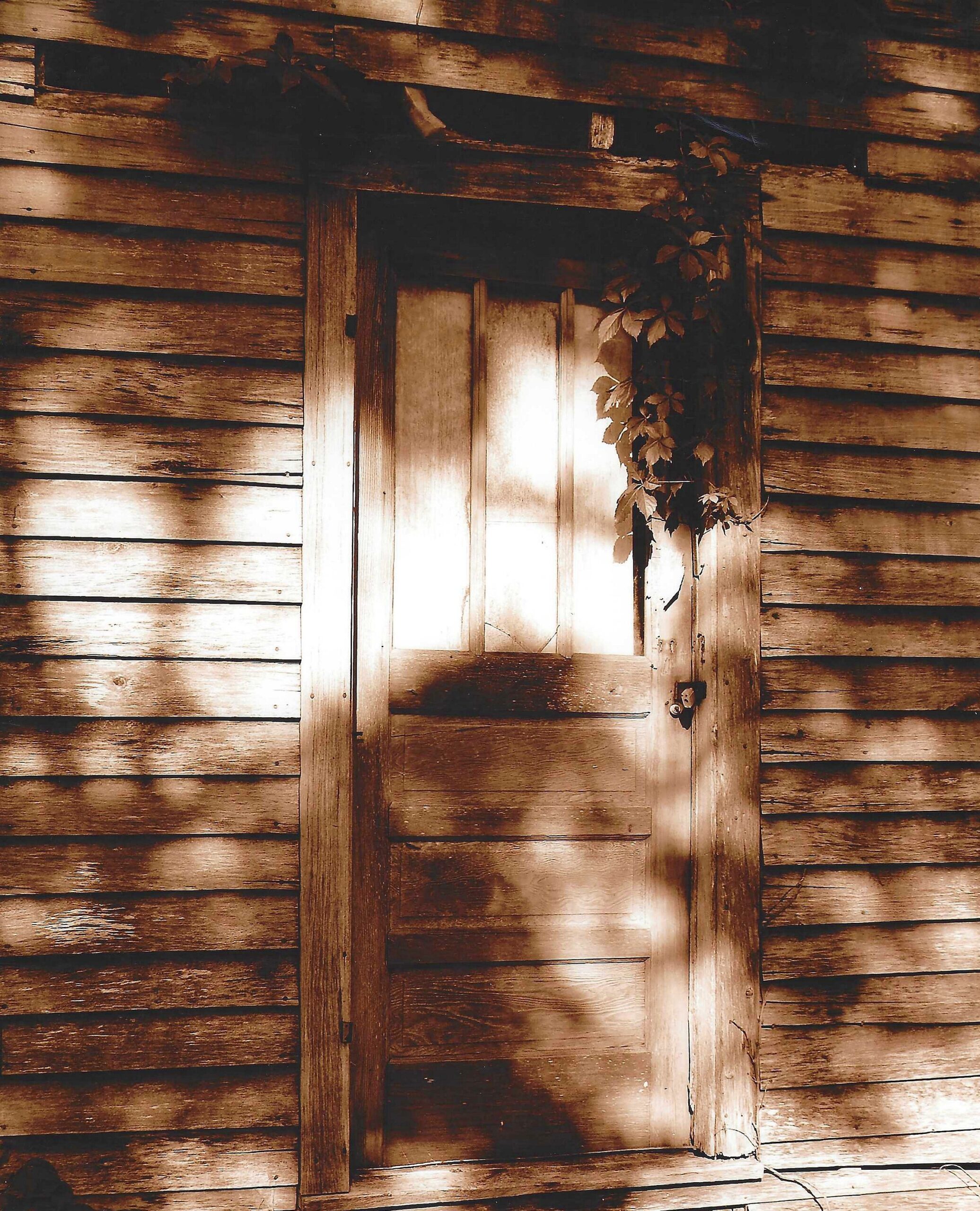
(The opening picture was a photograph of the entrance door to the home of Zodie and Mary Dora Creasy Graves which, until a few years ago, stood on Rabe Coats Road.)
3 responses to ““…but passing through a dark entry…””
https://pesnimp3.net/2.html
I love these stories. When my grandmother died, they put her on the porch of her house and had the funeral. The guests and children sat in the yard. There was no preacher, but the undertaker said a few words. My uncle’s 4th grade class walked from Independence School to the funeral.
A distance cousin of mine would talk about how the cats would start howling when the body was not embalmed and they would start smelling. Thanks for all your stories!
Jean, thank you for reading and sharing your stories, as well!